
Why external confirmation matters — and what it says about a gallery
A few days ago Russi Klenner called me. He was having breakfast, just before setting off for his fair stand. I was in the woods near Wiesbaden. His message was short: Stella Winter sold out at Art Düsseldorf. The Museum Kunstpalast has acquired a work. Russi thanked me for the collaboration.
Moments like these stay with you. Not because they concern turnover, but because they confirm something that, as a gallerist, you often only sense: that your own work holds up. That the decision to take an artist into the programme early was not just gut feeling.
Because the most important currency in this business is not the sale. It is confirmation from outside — from people and institutions that have no economic interest in my programme but come independently to the conclusion that an artistic position carries weight.
When a museum acquires
A museum acquisition is the strongest form of institutional confirmation. A curator decides that a work belongs in a public collection — a collection meant to last for decades. That is no favour and no trend. It is a bet on permanence.
Stella Winter was born in 1999. In 2023 we showed her first solo exhibition at Galerie Greulich. Her painting moves between screen and canvas, between the visual culture of the internet and the slowness of oil on canvas. That the Museum Kunstpalast in Düsseldorf has now acquired a work by her says something about Stella’s work. But it also says: the engagement we as a gallery undertook early on with this position was not speculation.
For collectors, a museum acquisition means two things: the artist becomes visible in an institutional context that reaches far beyond the gallery space. And one’s own purchase — if one was there early — gains art-historical anchoring.
When a museum exhibits
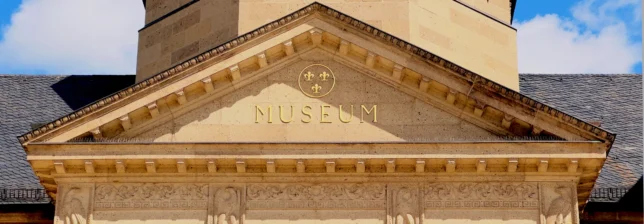
Not every museum exhibition means an acquisition. But every one means that an institution puts its spaces, its budget and its name behind an artistic position. That is a vote of confidence that cannot be bought.
Jan Muche, whom we have been showing at the gallery for years, will be on view at the Landesmuseum Wiesbaden in September. A state museum is not an off-space. It has a mission, a history, an audience that brings expectations. When an artist exhibits there, his work enters into dialogue with a collection that has grown over generations. That changes perception — for the audience and for the artist himself.
For collectors this means: a work shown in a museum acquires an exhibition history that cannot be invented. It meets an audience that was not looking for it.
When the right people write
The third form of confirmation is perhaps the quietest, but in the long run the most effective: a text.
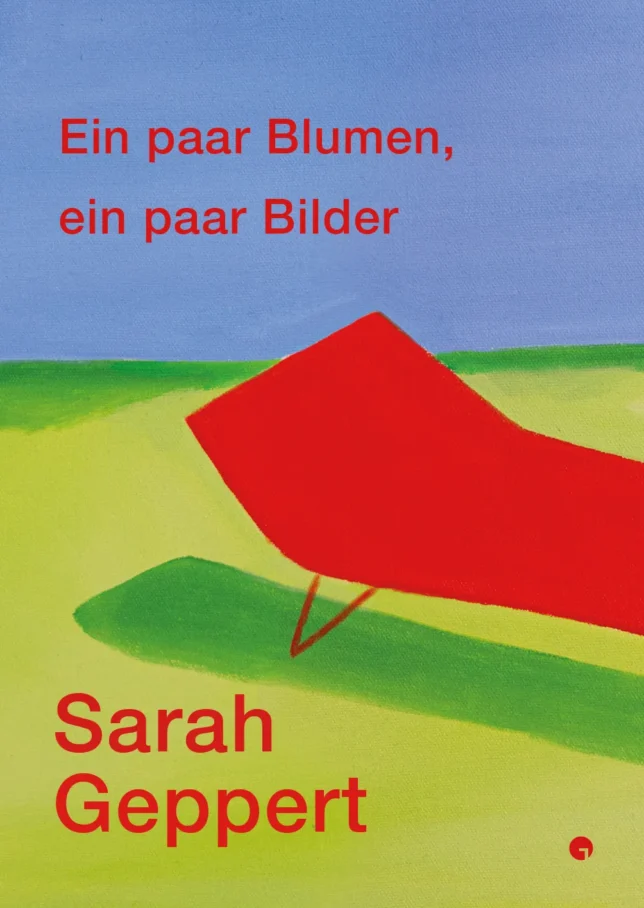
Wolfgang Ullrich has written about Sarah Geppert. Ullrich does not choose his subjects out of politeness. When he engages with a position, it is because he finds something there that touches his own questions. That is a form of attention no marketing can create.
A text like this provides context. It gives collectors a language to talk about the work. It anchors an artistic position in a discourse that reaches beyond the next fair. And it remains — in catalogues, in archives, online.
When collectors collect
The fourth form of confirmation is the most immediate: the private purchase. Not a single one, but a series. When an artist is represented in many collections, a network of independent decisions emerges. Each collector has decided for themselves: this work belongs in my collection. The sum of these decisions is a signal stronger than any single voice.
Sebastian Meschenmoser is represented in numerous private collections across Europe. That did not happen because we promoted him particularly loudly. It happened because his work convinces people who decide with their own money and their own judgement. There is no more honest form of confirmation.
What this means for gallery work
As a gallerist, my job is to discover, accompany and make visible artists. Whether this work holds up does not show in one’s own space. It shows outside — in museums, in texts, in collections. Where I have no influence. That is exactly what makes these moments so valuable.