
Why publishing matters so much to the gallery.
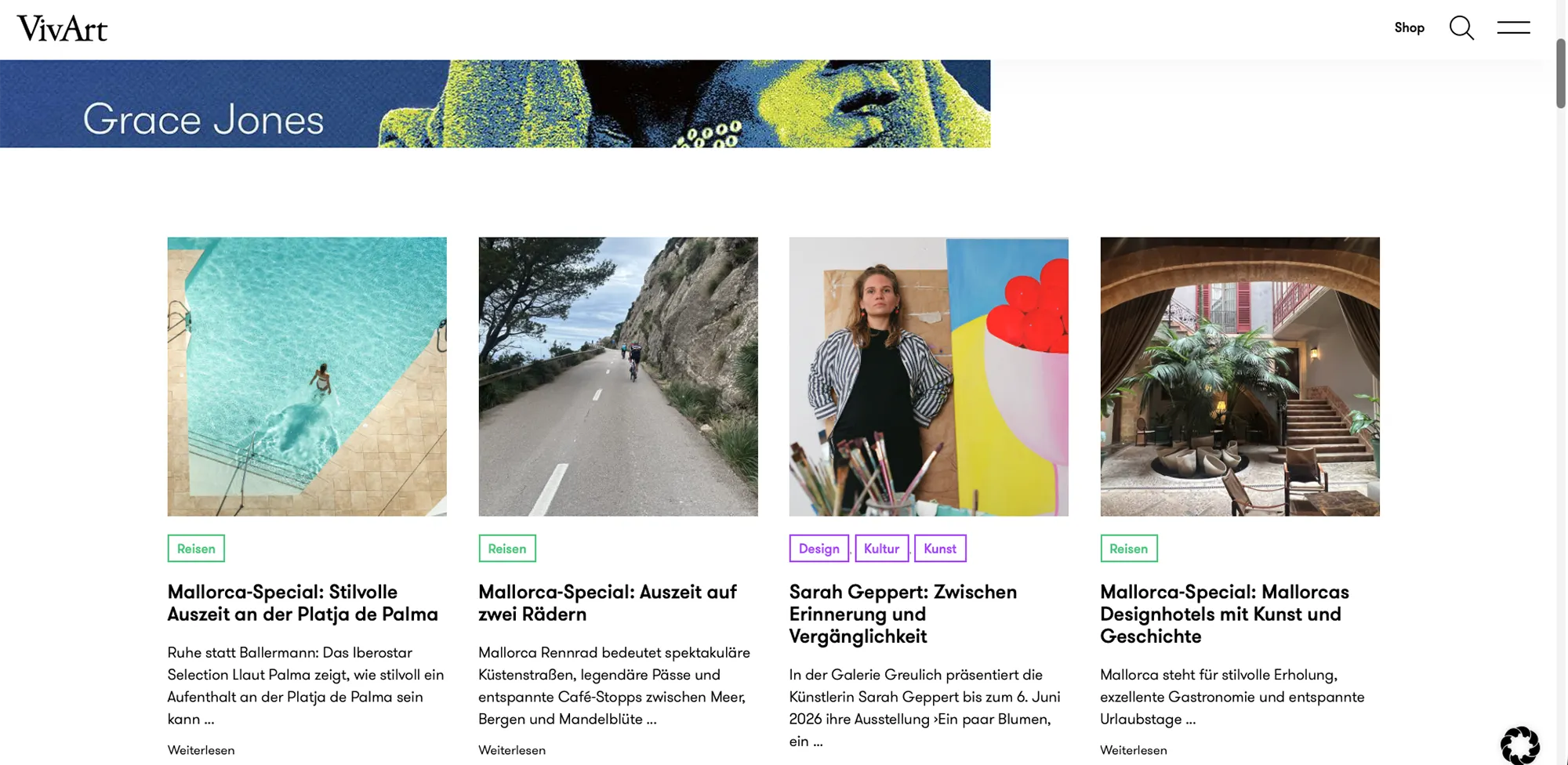
Sometimes I leave a like on Instagram. With Sarah Geppert I got carried away and left a comment: “I think it’s cool.” Her reply came by DM. Shortly afterwards I was standing in her studio in Pfungstadt. Now her pictures hang in the gallery – and VivArt magazine has published an extensive interview with her.
→ To the interview in VivArt magazine
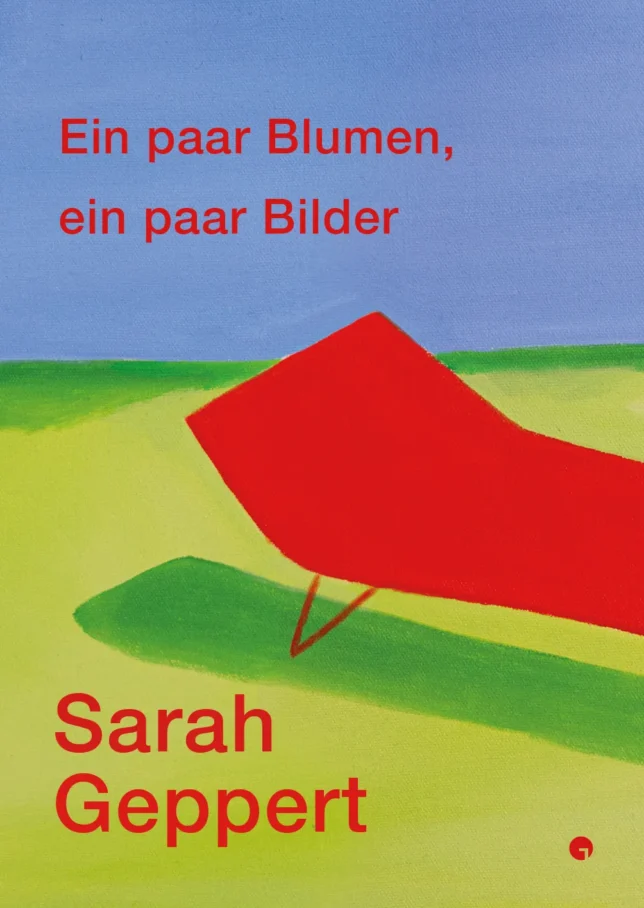
I am pleased, because the article conveys exactly what defines the exhibition “Ein paar Blumen, ein paar Bilder”: an artist who paints everyday things – laundry baskets, deckchairs, birthday buffets – and manages to draw something out of the seemingly banal that stays with you. Not through pathos, but through form and colour.
What makes Geppert’s painting special
Sarah Geppert paints flatly, in decisive tones. Orange tiles, green bread, blue kitchen tables. The colours have little to do with reality – and that is exactly what makes the pictures strong. They translate feelings into decisions about colour. The bread turns green because green bread raises questions. The table tilts because memories tilt.
For the works in this exhibition she looked through her family’s photo albums. Role models, motherhood, what remains and what fades. These pictures also led to her step into ceramics: small flower still lifes in clay that bring objects from the paintings into space. The two-dimensional becomes three-dimensional. The painted becomes tangible.
Wolfgang Ullrich and the longing for counter-images
The exhibition is accompanied by a publication – volume 34 of our series. In it: an interview with Sarah Geppert and a text by Wolfgang Ullrich. Ullrich is one of the most important art historians in the German-speaking world. We are extremely pleased that he wrote for us. It makes us feel confirmed in our work.
His thesis strikes a nerve. Ullrich reads Geppert’s painting as a counter-image to the perfect worlds of Instagram. The countless photos that influencers post of their flats, holidays and meals outdo one another in perfection. Filtered, edited, increasingly optimised by AI. Geppert’s pictures do the opposite. They are flat, clear, almost simple. They claim nothing. They show. And precisely this attitude – showing instead of claiming – is something painting can do well right now.
That it was Instagram, of all things, that brought the gallery and Sarah Geppert together is no contradiction. If anything, it shows that the platform also works beyond self-optimisation – if you look.